
Real vs Fake Christmas Tree: Which Is Really Greener? (Plus 5 Eco Alternatives)

Every December the same question comes up: is a real Christmas tree or a fake one better for the planet? Most people assume plastic wins because nothing gets cut down. The numbers say it is not that simple. The greenest choice depends on how long you keep an artificial tree, and on what happens to a real tree after the holidays.
Below you will find the carbon numbers side by side, what each option really involves, and a few greener alternatives that skip the debate altogether.
The Short Answer
A real tree that is chipped, composted or replanted after Christmas has the smallest footprint in most cases. An artificial tree only comes out ahead if you keep using it for a long time, usually ten Christmases or more.
The figures most often quoted come from the Carbon Trust, a UK organisation that measures carbon footprints. As reported by Euronews and several UK councils, they look like this for a tree about 2 metres (6.5 feet) tall:
| Tree type | What happens after Christmas | Approx. carbon footprint |
|---|---|---|
| Real tree | Chipped, composted or burned | About 3.5 kg CO2e |
| Real tree | Sent to landfill | About 16 kg CO2e |
| Artificial tree | Total over its life | About 40 kg CO2e |
So a fake tree starts with roughly ten times the footprint of a real tree that is disposed of well. That gap only closes if the artificial tree stays in use for about a decade or longer.
Real Christmas Trees: The Pros and Cons
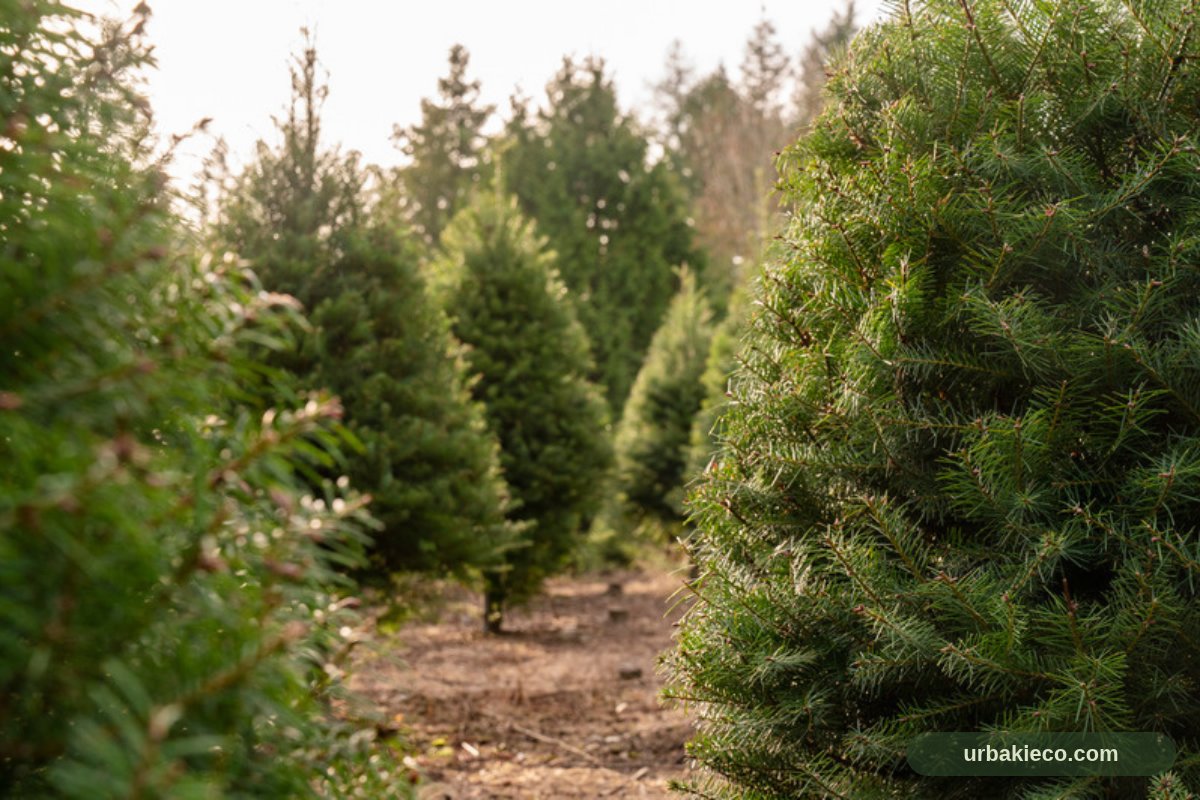
Most real Christmas trees are not taken from wild forests. They grow on farms as a crop, and a typical tree takes around 6 to 12 years to reach a good size. While it grows, it takes in carbon and gives shelter to birds and insects. Farms usually plant new trees to replace the ones they cut.
Related reading: How to Identify Non-Eco-Friendly Fabrics + Textiles to Avoid
What is good about them
- They are fully biodegradable. A real tree can turn into mulch, compost or firewood.
- Buying from a local farm keeps transport short and supports a local business.
- Many towns collect trees in January and chip them for parks and gardens.
What to watch out for
- A tree in landfill breaks down without air and releases methane, a gas much stronger than CO2. This is what pushes its footprint from 3.5 kg to around 16 kg.
- Long drives to pick up a tree add to the footprint. A short trip, or buying from a lot near home, keeps it low.
- Some farms use a lot of pesticides. If you can, ask the grower how they manage pests, or look for organic or low-spray farms.
Artificial Christmas Trees: The Pros and Cons
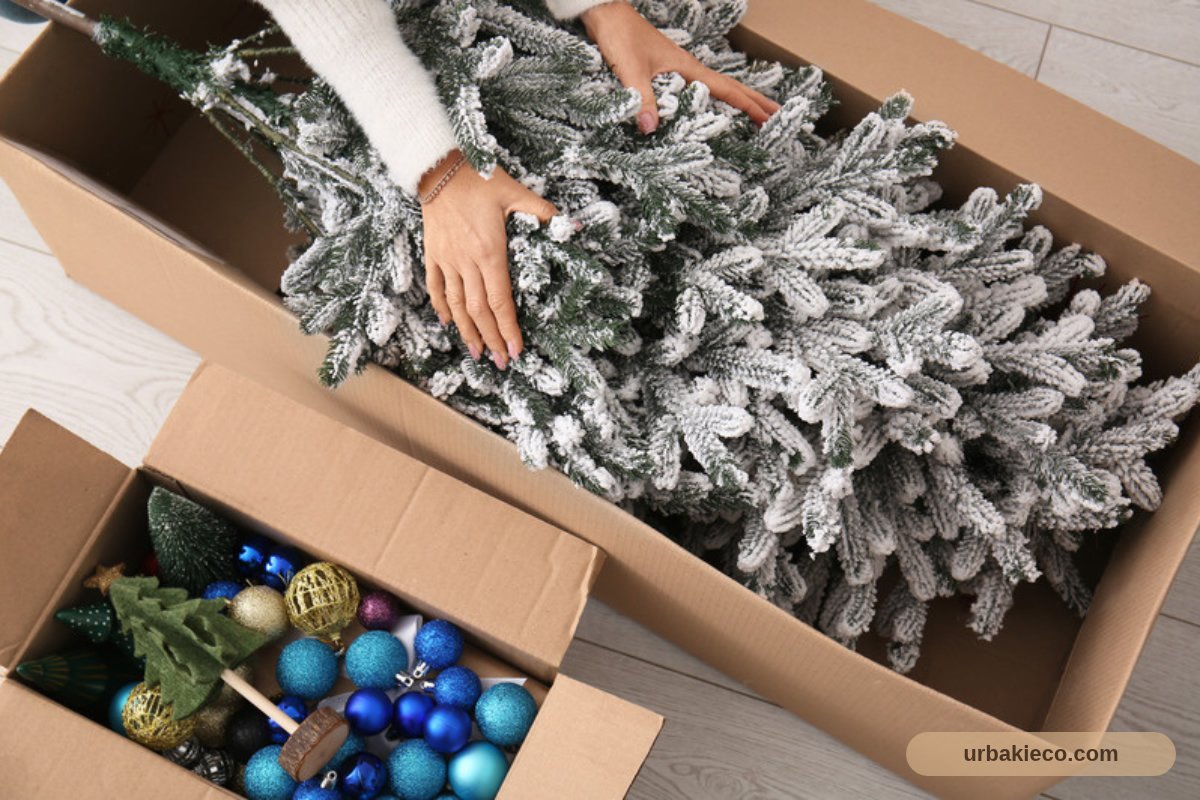
Most artificial trees are made from PVC plastic and metal, and a large share are made in China and shipped long distances. Most of their footprint comes from the factory, before the tree ever reaches your living room.
What is good about them
- One purchase can last many years, and every extra year of use lowers its footprint per Christmas.
- No needles on the floor and no watering.
- A good option for people with tree allergies, or for homes where getting a real tree each year is hard.
What to watch out for
- Mixed plastic and metal makes them very hard to recycle. Most end up in landfill, where the plastic stays for centuries.
- Cheap trees that look tired after two or three seasons are the worst choice of all.
- Replacing a tree just to follow a new color or style wipes out its benefit.
If you already own a fake tree
Keep it. The greenest artificial tree is the one already in your attic. Throwing it away to buy a real one would waste the carbon that went into making it. Use it for as many years as you can, store it carefully in a dry place, and when it really is past its best, try to give it away through a local swap group before it goes in the bin.
Potted and Rented Trees
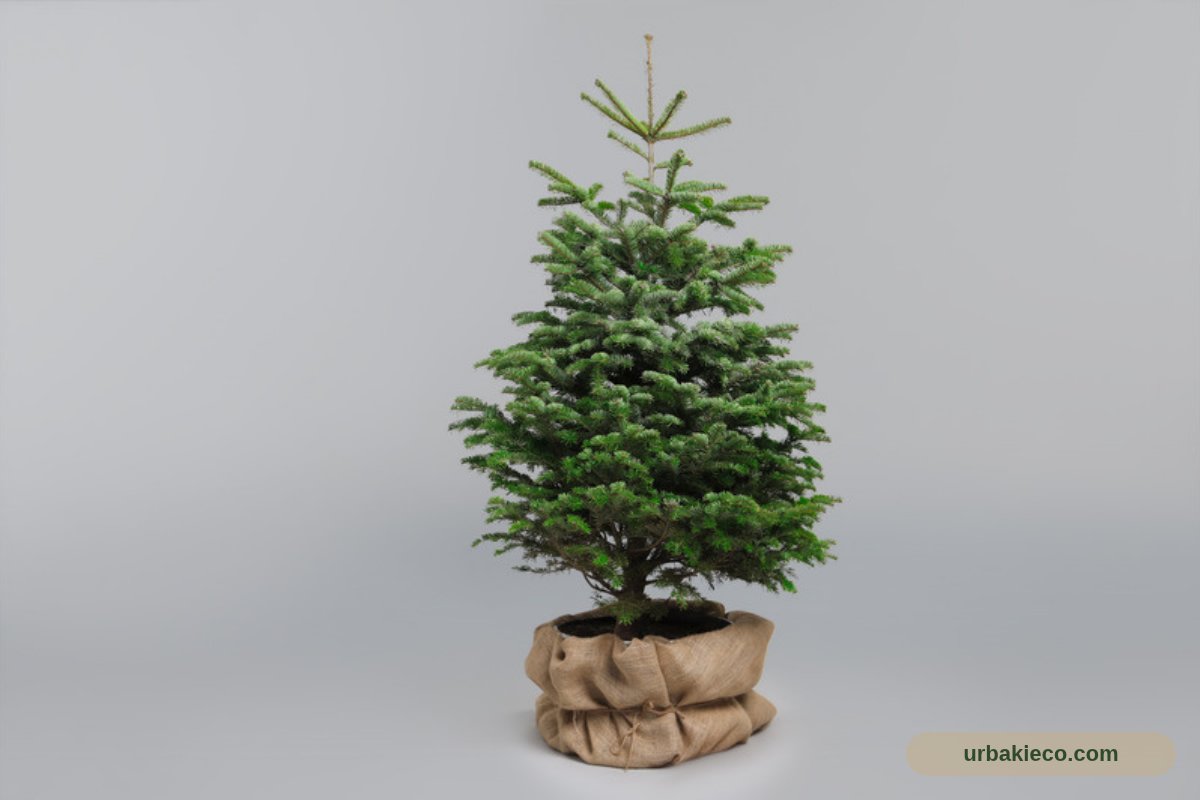
A living tree in a pot, with its roots still attached, is the option many councils and environmental groups rate highest. After the holidays you can plant it in the garden or keep it in its pot outside and bring it back in next December.
Tree rental is growing too. A farm delivers a potted tree in early December, you look after it, and they collect it in January so it can keep growing. Some services even let you get the same tree back every year.
A few tips to keep a living tree healthy:
Related reading:How to Identify Non-Eco-Friendly Fabrics + Textiles to Avoid Zero Waste Christmas Dinner: 10 Easy Ways to Cut Food Waste This Holiday
- Keep it inside for a short time. About 10 to 12 days is a safe limit. Warm, dry rooms can wake the tree up from its winter rest.
- Place it away from heat. Keep it far from radiators, fireplaces and sunny windows.
- Water little and often. The soil should feel slightly damp, never soggy.
- Move it out slowly. A few days in a cool garage or porch helps it adjust before it goes back outside.
- Book early. Rental trees often sell out by early December.
How to Get Rid of a Real Tree the Right Way
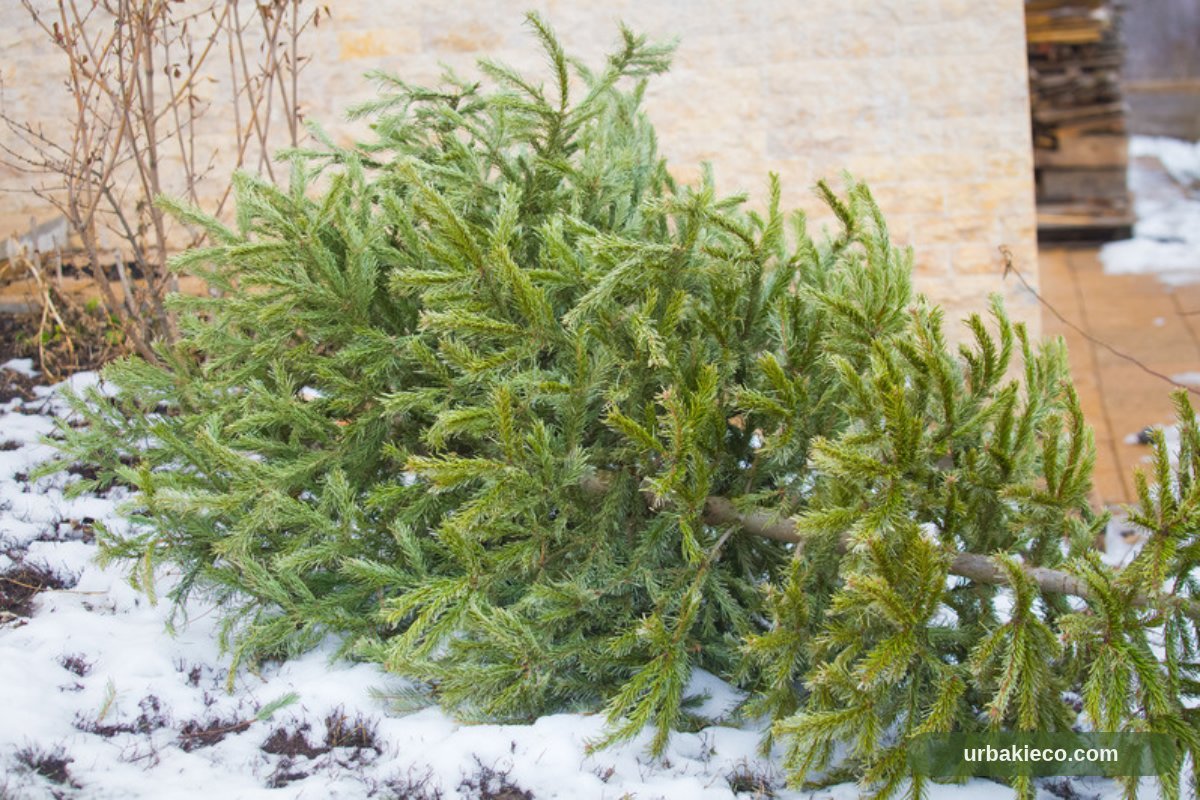
This step decides whether a real tree is a great choice or just an average one. The goal is simple: keep it out of landfill.
- Use your local collection. Many cities pick up trees for free in early January and turn them into mulch. Check your city or county website for the dates.
- Drop it at a recycling center. Many accept trees for composting.
- Cut it up for the garden waste bin. Remove all lights, hooks, tinsel and decorations first.
- Mulch it at home. Needles and small branches make a good mulch around acid-loving plants like blueberries and rhododendrons.
- Build a wildlife pile. Stack branches and pieces of trunk in a quiet corner of the garden. Insects, birds and small animals use it as shelter all winter.
- Save the trunk. Once dry, it can be cut into logs or small slices for crafts.
One rule: never burn a whole tree in an indoor fireplace. Fresh evergreen wood is full of sap and can cause chimney fires.
Greener Alternatives to a Traditional Tree
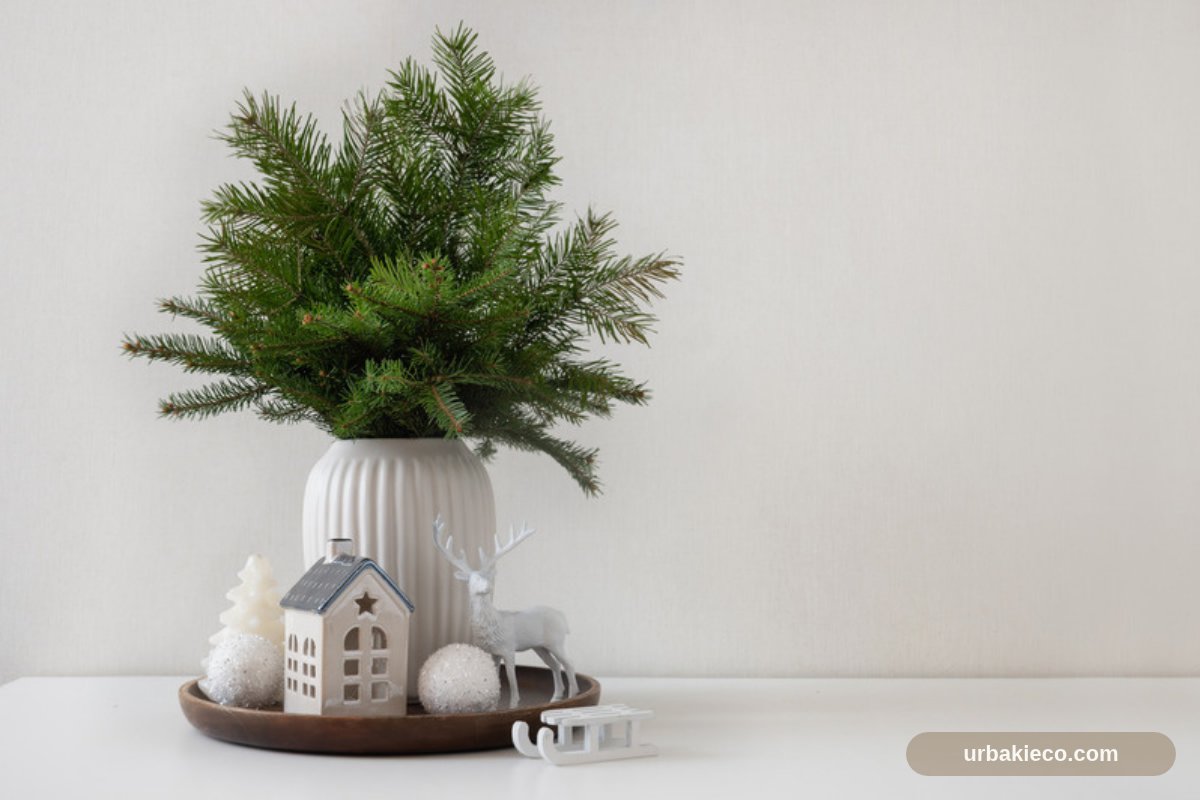
Sometimes the best answer to the real or fake question is neither. These ideas give you a festive corner with almost no footprint:
- A branch tree. Gather fallen branches on a walk, put them in a tall vase or jar, and hang light ornaments on them.
- A wooden tree. A simple frame made from scrap wood or old pallets can be used every year.
- A houseplant tree. Decorate a large houseplant you already own, like a Norfolk Island pine or a fiddle leaf fig.
- A wall tree. Make a tree shape on the wall with fairy lights, string or washi tape, then hang cards and small ornaments on it.
- Secondhand. If you want an artificial tree, look for a used one first. Lots of people give away good trees when they move or downsize.
Quick Checklist for a Greener Tree
- Already have a fake tree? Keep using it for as long as it lasts.
- Buying real? Choose a local farm and plan how you will recycle it.
- Have a garden? A potted tree you can plant is a great choice.
- Small space? Try a branch tree or a wall tree.
- Decorate with ornaments you already own, handmade pieces or secondhand finds.
- Use LED lights on a timer to save energy.
Frequently Asked Questions
How many years do I need to use an artificial tree to beat a real one?
About ten years or more, based on Carbon Trust figures. If you would replace it sooner, a real tree that gets chipped or composted is usually the greener option.
Is cutting down a real Christmas tree bad for forests?
Most real trees are grown on farms as a crop, not taken from wild forests. Farms normally replant after harvest. The bigger issue is what happens to the tree after Christmas, so make sure it gets recycled.
Related reading:How to Identify Non-Eco-Friendly Fabrics + Textiles to AvoidZero Waste Christmas Dinner: 10 Easy Ways to Cut Food Waste This Holiday DIY Christmas Ornaments from Recycled Materials: 6 Easy Zero Waste Ideas
Can I compost my Christmas tree at home?
Yes, but it takes a while. Cut it into small pieces or shred it first. Needles break down slowly, so mix them with other garden waste, or use them as mulch instead.
You Might Also Like
- DIY Christmas Ornaments from Recycled Materials: 6 Easy Zero Waste Ideas
- Zero Waste Gift Wrapping: 9 Paper-Free Ideas for Christmas
- Eco-Friendly Christmas: Sustainable Ideas for Decorations, Gifts, and More
The greenest tree is the one you use well. Keep the fake tree you already have, recycle the real one you buy, or try a living tree that can grow for years. Any of these makes for a merry Christmas with a lighter footprint.


You may also like